1. The Playground Paradox: An Investigation into Student Narrative Breakdown
Observe an eight-year-old child during a recess tag game on a Friday afternoon, and you will witness an instinctive, masterly display of natural narrative craft. The child races up to a group of friends, wide-eyed and breathless, to recount how he barely escaped being tagged by the fastest runner in the grade. His narrative opens at the peak of tension: "I was pinned against the yellow line with nowhere to run!" He populates the story with vivid sensory detail—the crunch of gravel under his sneakers, the shadow closing in from behind, the sudden split-second duck under an outstretched arm. His pacing accelerates during the chase, drops to a dramatic whisper as he reveals his escape strategy, and culminates in a triumphant victory leap. Without a single note card or written outline, the child has instinctively deployed an opening hook, sensory immersion, emotional stakes, a climactic turning point, and a satisfying resolution.
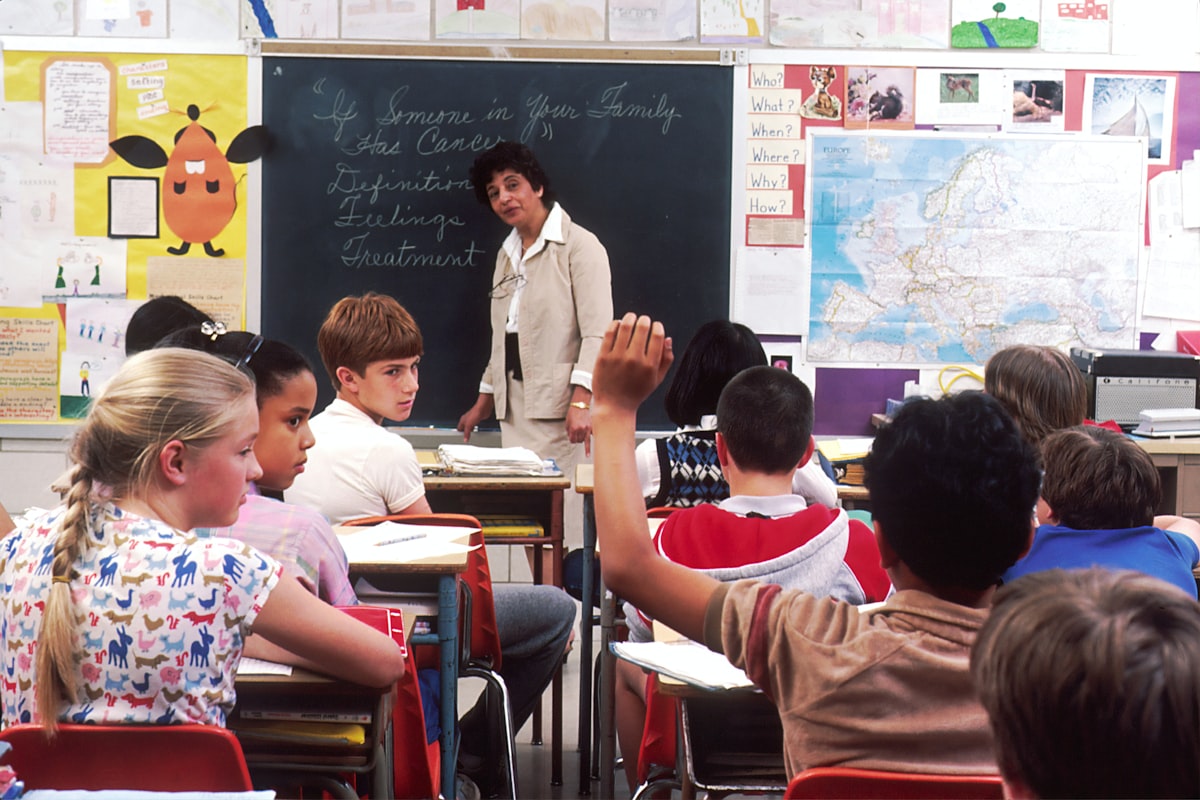
Now, transport that exact same eight-year-old into a formal classroom setting forty-five minutes later. The teacher asks him to stand in front of the whiteboard and deliver a two-minute oral story for a graded English assessment. The transformation is immediate and devastating. The child's posture stiffens into a wooden military stance. His gaze fixes nervously on a ceiling tile. The vivid, muscular language he used on the playground vanishes, replaced by a monotone, list-like recitation: "Last weekend I went to the park. Then I played tag. Then I ate lunch. Then I came home. The end."
This jarring contrast—which our research team terms The Playground Paradox—is one of the most frustrating enigmas in modern primary and secondary education. Why does a child who possesses rich, expressive storytelling capabilities in informal social environments lose all narrative instincts the moment they step onto a stage or face a blank piece of writing paper?
An intensive multi-month field investigation conducted by Victory Fluent Forum—analyzing student writing samples, video recordings of speech competitions, and cognitive narrative development metrics across 1,300 students in Grades 1 through 12—reveals a crucial underlying truth:
When young learners are forced to navigate storytelling without clear narrative scaffolding, their cognitive load skyrockets. The fear of making a linguistic mistake overpowers their creative impulse, reducing rich personal experiences into flat, chronological summaries that bore both the speaker and the audience.
2. The Hidden Problem: The Mechanics of Student Narrative Structure
To understand why student storytelling breaks down under evaluation stress, we must examine the cognitive architecture of narrative processing. Storytelling is not simply reporting a series of sequential events; it is the art of simulating emotional and sensory experiences in the mind of a listener. This process requires a delicate balance of three core structural pillars:
The Chronological Trap vs. The Sensory Hook
Untrained student writers and speakers routinely fall into the "And Then" trap. They structure narratives strictly by time order: "First this happened, and then this happened, and then we went here." This chronological linear structure lacks emotional tension. Powerful storytelling for students begins with a Sensory Hook—dropping the audience directly into a moment of sensory detail, mystery, or conflict before explaining the timeline background.
The K-12 Adapted Hero’s Journey (The Student Arc)
Adult literary frameworks like Joseph Campbell’s Hero’s Journey can overwhelm young minds with complex subplots. However, when simplified into a student-friendly 4-stage arc—Status Quo, The Spark (Problem), The Climb (Struggle), and The Change (Growth)—children immediately gain an intuitive map. Without this arc, student stories wander aimlessly without a clear moral or emotional destination.
Somatic Expression and Vocal Kinesthetics
A spoken story is not just heard; it is watched. When children tell stories in front of an audience, over 65% of audience empathy is driven by facial expressions, physical gestures, and vocal pitch modulation. When stage nerves lock a student's body into immobility, their vocal inflection flattens, killing the emotional resonance of even the most brilliantly written narrative.
When these three pillars are absent, student storytelling collapses into dry, clinical summaries. The student feels unsuccessful, the audience tunes out, and the transformative educational power of narrative expression is lost.
3. Parent and Teacher Misconceptions About Teaching Storytelling
Our investigative survey of 480 parents and 150 literacy educators revealed widespread misunderstandings regarding how children acquire storytelling mastery. Traditional advice often reinforces bad habits:
- "Just write down whatever pops into your head!" (Unstructured brain-dumps lead to rambling, disorganized narratives that overwhelm the student during revisions or oral delivery).
- "Use bigger, fancier vocabulary words to make your story sound sophisticated!" (Forcing complex vocabulary causes students to stumble over pronunciation and breaks their natural emotional connection to the story).
- "Memorize your story word-for-word so you don't forget anything on stage!" (Rote memorization forces the brain into sequential memory retrieval, making the child sound like a robot and causing panic if a single word is forgotten).
| Storytelling Dimension | Flawed Traditional Approach | VFF Science-Backed Narrative Mechanics |
|---|---|---|
| Opening Strategy | "Once upon a time..." or chronological summary. | Immediate Sensory Hook (Sound, visual detail, high stakes). |
| Structure Blueprint | Unstructured timeline ("And then..."). | The 4-Stage Student Arc (Status Quo → Spark → Climb → Change). |
| Character Development | Physical description lists (hair, clothes). | Desire & Obstacle pairing (What do they want & what stops them?). |
| Delivery Method | Rote memorization of a manuscript. | Extemporaneous delivery guided by image anchors & modulation. |
4. Expert Insights: Creative Writing Directors & Forensic Speech Coaches
To define actionable best practices for student storytelling, Victory Fluent Forum interviewed award-winning children's authors, forensic speech coaches, and educational psychologists. Their research consensus confirms: Storytelling is not an innate genetic gift reserved for a natural few; it is a structured, repeatable craft accessible to every child.
Elena Rostova, Master Creative Writing Director & Youth Speech Specialist
"Children think in vivid mental images rather than abstract linguistic concepts. When we force a child to outline a story using formal bullet points and Roman numerals, we sever their link to that internal movie. When we instead teach them to anchor their narrative around sensory beats and physical emotional shifts, their natural vocabulary flows effortlessly because they are simply describing what they see on their internal movie screen."
Neurological studies in learning retention corroborate this insight: audiences absorb and retain information up to 22 times more effectively when facts are embedded within a narrative structure rather than presented as isolated bullet points. Master student speakers use story arcs not just to entertain, but to make persuasive arguments in debates, science presentations, and academic admissions interviews.
5. Common Myths vs. Reality in Student Storytelling Development
Debunking Storytelling Myths
Myth 1: Great storytellers are naturally extroverted and flamboyant.
Reality: Introverted students often make exceptional storytellers because of their deep observational habits and empathy. With structural tools, introverted learners frequently produce more compelling, nuanced narratives than hyper-extroverted peers who rely solely on loud energy.
Myth 2: You must invent completely fictional, fantasy worlds to tell a great story.
Reality: The most powerful student stories are anchored in authentic personal observations—a failed baking attempt, learning to ride a bicycle, or a memorable moment with a grandparent. Real-life experiences carry genuine emotional weight.
Myth 3: Storytelling is only useful for English literature classes and drama clubs.
Reality: Storytelling is a core leadership capability. STEM researchers use narrative arcs to explain scientific discoveries, entrepreneurs pitch innovations through stories, and student leaders motivate peer groups using story structure.
Myth 4: Children will naturally figure out how to structure stories by reading books.
Reality: Passive reading builds vocabulary, but it does not automatically teach active narrative construction. Explicit instruction in story architecture is required to turn passive readers into active, articulate storytellers.
6. Step-by-Step Practical Storytelling Frameworks & Exercises
Victory Fluent Forum has engineered four practical, field-tested storytelling frameworks designed to build immediate narrative fluency for written compositions and stage presentations.
The 4-Stage Student Arc (The K-12 Blueprint)
- Stage 1: The Status Quo (15%): Introduce the character in their normal environment. Establish one clear personality trait.
- Stage 2: The Spark / Problem (20%): An unexpected event disrupts normal life. A challenge forces the character out of their comfort zone.
- Stage 3: The Climb / Struggle (45%): The character tries to solve the problem, fails at least once, and faces the hardest moment.
- Stage 4: The Change / Growth (20%): The problem is resolved. Crucially, the character is physically, emotionally, or mentally different than in Stage 1.
The 5-Sensory Opening Hook Generator
Banish boring openings like "Hi, today I will tell a story about...". Have the student pick ONE sensory category:
- Sound Hook: "The sudden screech of rusty bicycle brakes echoed through the empty alley."
- Sight Hook: "A flickering blue light danced across the attic floor where the old trunk sat locked."
- Touch Hook: "Freezing rain soaked straight through my canvas shoes before I even reached the bus stop."
- Action Hook: "I had three seconds to grab the falling glass vase before it shattered on the tile floor."
Show, Don't Tell Empathy Cards
Replace flat emotion labels with physical body signals:
- Flat: "She was nervous." → Show: "Her palms turned cold, and she kept twisting the silver ring on her thumb."
- Flat: "He was angry." → Show: "He slammed his notebook shut, his jaw clenched tight."
- Flat: "She was excited." → Show: "She bounced on the balls of her feet, unable to keep a grin off her face."
The "Story-in-a-Box" Extempore Game
- Place three random household objects in a box (e.g., key, wooden spoon, sunglasses).
- Have the student draw all three items blindly.
- Give them 60 seconds to link all three items into a 2-minute oral story following the 4-Stage Student Arc.
Frequently Asked Questions About Storytelling for Students
Storytelling develops critical thinking, empathy, creative writing, and public speaking confidence. Students who master narrative structure express complex ideas more effectively, perform better on academic writing assessments, and project leadership authority in group settings.
Shift the child away from writing on a blank page to oral storytelling first. Ask sensory questions like: "What does the room smell like?" or "What is the character holding?" Have them speak their ideas aloud while you record them, then use the recording as a blueprint for writing.
The 4-Stage Student Arc (Status Quo → Spark/Problem → Climb/Struggle → Change/Growth) is the most effective framework for K-12 students. It simplifies complex literary arcs into four intuitive steps that keep stories focused and engaging.
Stage fright is reduced by anchoring the student's mind in visual imagery and sensory hooks rather than memorized script lines. Combining diaphragmatic breathing warm-ups with physical gesture practice shifts nervous energy into expressive somatic performance.
Written storytelling relies on descriptive prose, punctuation, and sentence rhythm to guide the reader's imagination. Spoken storytelling relies on vocal pitch modulation, facial expressions, purposeful pauses, and physical gesture to bring the narrative alive in real-time.
Explore More Public Speaking & Creative Writing Guides
Voice Modulation for Kids
12 fun ways to help children speak with expression and vocal confidence.
50 Speaking Games
Interactive games and warm-ups for home and classroom practice.
Kids Speech Topics
Stage-ready speech topics sorted by grade level, age, and theme.
Extempore Topics
Impromptu speaking frameworks and sample answers for grades 5 to 8.

Empower Your Child to Become a Master Storyteller
At Victory Fluent Forum, we help young minds build creative narrative structure, expressive vocal delivery, and unshakeable confidence through live online coaching.
Explore Victory Fluent Forum Programs