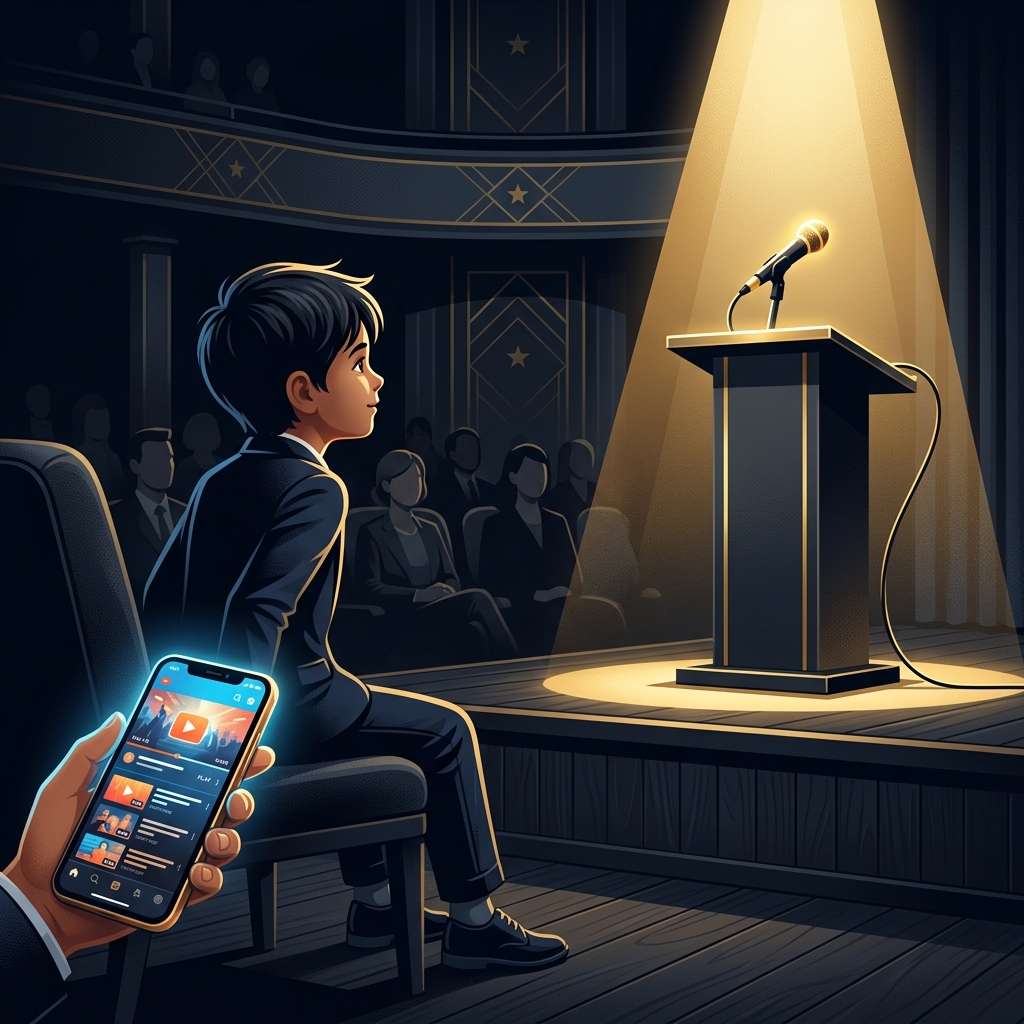
Walk into any modern classroom or family living room today, and you will witness a silent competitor winning the battle for children's minds: the attention economy. Driven by short-form video algorithms (TikTok, Instagram Reels, YouTube Shorts), the sensory overload of rapid-fire clips delivers instant dopamine micro-doses every few seconds. This digital deluge causes a silent cognitive epidemic among K-12 students, characterized by fragmented attention, lexical erosion, and severe performance anxiety. To reclaim our children's intellectual stamina and real-world presence, we must understand the neurological toll of digital consumption and deploy active, structured communication frameworks.
When the screen goes black and children are placed in real-world environments, the impact of passive consumption becomes glaringly obvious. To pull children out of this scroll loop, we must understand the precise cognitive toll of digital distractions and deploy active, structured antidotes that build focus, verbal assurance, and active leadership.
1. The Dopamine Loop: Understanding "Scroll-Induced" Cognitive Fragility
Short-form digital media is engineered to exploit the brain's novelty-seeking neural pathways. Every time a child swipes to a new video clip, their brain releases a burst of dopamine in the prefrontal cortex. Over time, this constant stimulation raises their baseline threshold for gratification. The quiet concentration required to read a book, outline an essay, or prepare a school presentation becomes physically painful because it lacks the high-frequency visual and auditory updates of a smartphone screen.
This creates a state of cognitive fragility. When faced with tasks that demand sustained mental stamina, children experience rapid boredom, frustration, and cognitive fatigue. Rather than developing the muscular focus needed to think through complex parameters, their attention skitters across the surface of subjects. Scientific research on K-12 focus indicates that prolonged exposure to high-frequency video updates reduces a child's capacity for deep, analytical problem-solving, leaving them with highly fragmented understanding.
2. Lexical Erosion: How Short Clips Shrink a Child's Word Bank
A secondary consequence of the short-form video era is the dramatic weakening of real-world vocabulary, commonly referred to as lexical erosion. Short clips rely on sensory hyper-stimulation—glowing text edits, background audio tracks, and expressive emojis—to convey meaning, leaving little room for descriptive verbal expression. As a result, the lexical complexity of language consumed by K-12 students has dropped significantly.
Children are losing their descriptive word bank. When describing complex feelings or structured arguments, they increasingly rely on vague, generic placeholders ("like," "stuff," "thing") or standard internet jargon. This lexical erosion directly impacts their academic writing and public speaking. Without a robust vocabulary, children struggle to express their unique perspectives clearly, leading to chronic frustration and a severe loss of academic confidence when called on to present in class.
3. The "Digital Shield" and the Rise of Stage Fear
While digital screens are highly stimulating, they are ultimately passive shields. A child can watch hundreds of online influencers without ever having to participate in an active, face-to-face conversation. This lack of reciprocal social interaction stunts the development of real-world communication muscles.
When forced to stand in front of a class, look peers in the eye, and speak without a screen to hide behind, children experience intense performance anxiety. The absence of immediate "likes" or digital filters creates a feeling of intense vulnerability. This triggers a physiological flight-or-fight response: dry throat, elevated heart rate, locking knees, and verbal freezing. The digital shield protects them from social friction in the short term, but leaves them unequipped for real-world leadership, debate, and presentation scenarios.
4. The VFF Focus Restoration Exercise: The "Three-Second Sensory Check"
To counteract digital distractions and help students rebuild their cognitive presence, the mentors at Victory Fluent Forum utilize a proprietary, neuroscience-backed training strategy called the Three-Second Sensory Check. This is an exercise parents and educators can practice with children daily to anchor their focus before speaking:
- The Three-Second Pause: Before starting any presentation or answering a question, the student must stand in silence for exactly three seconds. They use this time to make direct eye contact with three different people in the room. This breaks the impulse for rapid, rushed speech.
- Diaphragmatic Grounding: The student takes one deep breath from their diaphragm, expanding their belly rather than raising their shoulders. This stimulates the vagus nerve, sending a signal to the brain that downregulates cortisol (the stress hormone) and eliminates physical shaking.
- The Describe-Design-Deliver Framework: The student mentally identifies three physical objects in their immediate environment and describes them silently using precise, non-generic adjectives. They then state their core message clearly and deliver their thoughts with open hands and an assertive, upright posture.
By practicing this grounding sequence regularly, children train their brains to focus on the immediate physical space, replacing scroll-induced anxiety with calm, controlled presentation authority.
5. Creative Writing: Synapsing Cognitive Connections
To rebuild a child's attention span, we must provide highly engaging, structured alternatives that demand cognitive depth. This is where structured creative writing acts as a neurological catalyst. Unlike passive watching, writing is a generative process that requires the brain to synchronize multiple cognitive networks across both hemispheres.
When a child sits down to write a story, they must formulate a narrative arc, invent three-dimensional characters, select strong active verbs, and structure their thoughts into paragraph blocks. This process actively synapses cognitive connections. It teaches the brain that true satisfaction comes from the step-by-step creation of an original concept rather than a quick swipe. Structured writing is mental weightlifting; it builds the cognitive stamina required for deep, prolonged academic focus.
6. Public Speaking: Transforming Spectators into Active Leaders
If creative writing structures the mind, public speaking activates it. To pull children out of their social anxiety loop, they must practice step-by-step presentation mechanics in a safe, peer-group environment. Public speaking training teaches children how to turn their nervous energy into dynamic stage presence.
At Victory Fluent Forum, we focus on five core mechanical pillars:
- Vocal Projection & Resonance: Learning to speak from the diaphragm to project authority and prevent vocal strain.
- Eye Contact Foundations: Building genuine eye connection with individuals in an audience to foster trust and confidence.
- Strategic Pausing: Eliminating filler words ("um," "like," "uh") by replacing them with purposeful, dramatic silence.
- Open Body Stance: Using assertive gestures and robust physical posture to reinforce the spoken message.
- Persuasive Storytelling: Crafting logical arguments using the classic rhetorical triad of Ethos, Pathos, and Logos.
By mastering these pillars, a child transitions from an anxious spectator into an articulate communicator who commands attention in any setting.
Empower Your Child to Speak with Confidence
Do not let digital distractions quiet your child's potential. Victory Fluent Forum (VFF) is a premium, elite live communication academy selected and incubated under the prestigious Symbiosis Skills & Professional University (SSPU) Pune Symbiosis Launchpad 30 startup incubation.
Nurtured by Founder & Lead Mentor Mrs. Simran Bagwan (M.A. English, M.Ed) with 15+ years of teach-excellence, we provide daily high-attention live classes that turn anxious observers into confident leaders.
Active Pricing Structure (Mon–Fri Daily Classes):
1:5 Group Plan
1:1 Essential Plan
1:1 Intensive Plan
7-Day Dedicated Learning & Commitment Policy
To protect our mentors' premium time, refund claims under our satisfaction policy are strictly conditional. Claims are only valid if the student maintains 100% attendance in the first week and submits all daily creative assignments on time. Serious learners only.