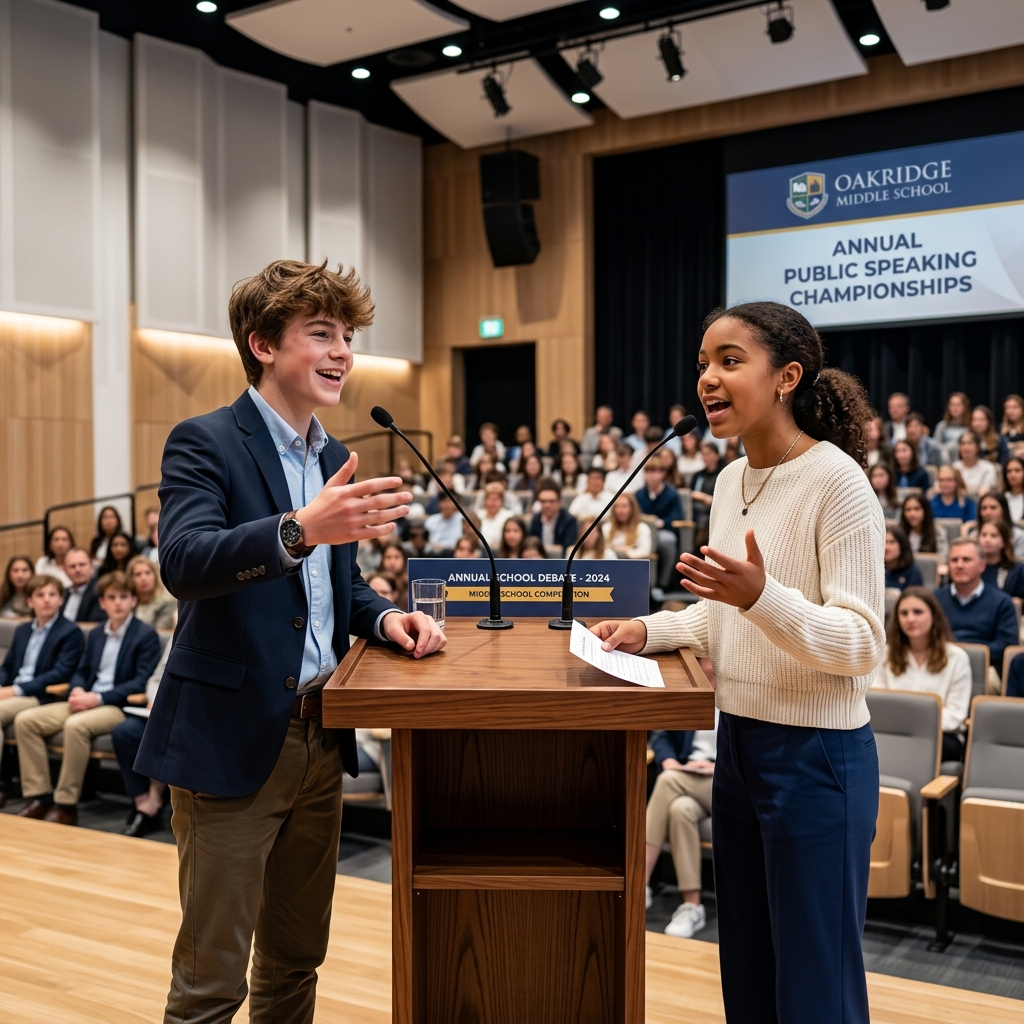
Securing admission to global elite universities (like the Ivy League, Oxbridge, or top-tier Indian institutions) has never been more competitive. In an era where thousands of applicants achieve perfect SAT, IB, or Board exam scores, technical academic metrics are losing their power to differentiate candidates. Admissions committees increasingly rely on qualitative filters: personal statements, group discussions (GDs), and live interviews. A student who can write a perfect paper but struggles to articulate their thoughts under pressure will struggle to stand out. To give Gen-Z applicants a competitive edge, we must teach them how to structure arguments, listen actively, and communicate with authority.
At Victory Fluent Forum, we believe that interview preparation is a specialized form of public speaking. By mastering conversational frameworks, students can navigate difficult questions with ease. Let's analyze the shifting admissions criteria and outline the VFF strategy for university interview success.
1. Why Elite Universities Prioritize Verbal Articulation
Admissions panels at top universities are not looking for rehearsed, robotic answers. They look for **Conversational Maturity**—the ability to hold an intellectual dialogue with a professor or professional interviewer. They want to see how a student handles cognitive friction, structures an opinion, and handles unexpected questions.
Group Discussions (GDs) are particularly challenging because they evaluate interpersonal soft skills. Panels look for candidates who can lead a group without dominating it, synthesize opposing view points, and contribute logical, valuable ideas. A candidate who simply shouts or recites memorized facts will be quickly filtered out.
2. Core Articulation Frameworks: Ethos, Pathos, and Logos
To construct a persuasive argument in an interview or group discussion, students should utilize the classic Aristotelian triad of rhetoric:
A. Establishing Ethos (Credibility)
Do not simply list achievements. Connect your activities to an authentic interest. Instead of saying, *"I volunteered at a local animal shelter,"* explain *why*: *"My volunteer work was driven by an interest in local biodiversity conservation, which led me to study the shelter's resource needs."* This shows maturity and intent.
B. Injecting Pathos (Emotional Connection)
An interview is a human connection. Use storytelling. Share the challenges you faced during a project, what you learned, and how it shaped your values. Personal narratives make you memorable and break the clinical monotony of standard application profiles.
C. Applying Logos (Logical Structure)
When asked a complex question, do not ramble. Organize your answer using the **Point-Reason-Example-Point (PREP)** structure. State your point clearly, explain the reason, provide a concrete example or data point, and restate your conclusion. This keeps your answer concise and easy to follow.
3. Navigating Group Discussions (GD) with Poise
To succeed in a group discussion, follow these three behavioral guidelines:
- Active Listening: Take brief notes while other candidates speak. This shows you value their perspective.
- The Socratic Entry: Avoid interrupting or shouting. Wait for a natural pause and enter the conversation by building on a peer's point: *"I agree with Rohan's point about [Topic], and I would like to add an extra dimension regarding..."*
- Synthesizing: If the discussion becomes chaotic, act as the facilitator. Summarize the opposing arguments and guide the group toward a logical resolution: *"We have heard two interesting viewpoints. Let's look at how we can balance both..."* This immediately demonstrates leadership and emotional intelligence.
4. Victory Fluent Forum Practical Strategy: The VFF "S.T.A.R.L." Interview Prep Matrix
At Victory Fluent Forum, we train students to structure their personal stories using the **S.T.A.R.L. Matrix**. This framework ensures every story is detailed, logical, and impactful:
- S - Situation: Describe the specific context or problem.
Example: "During my school science fair, our team's main demonstration model broke 30 minutes before the judges arrived." - T - Task: Identify the challenge and your specific responsibility.
Example: "My task was to repair the electrical connections while coordinating our presentation script." - A - Action: Detail the steps you took to resolve the issue.
Example: "I led a quick 2-minute diagnostic, assigned two team members to greet the judges, and re-soldered the loose wire." - R - Result: Highlight the outcome (use metrics if possible).
Example: "The model functioned perfectly, and our team won the 'Best Innovation' award." - L - Learning: Conclude with the personal growth or skill you built.
Example: "This taught me the importance of maintaining composure under pressure and communicating clearly during a crisis."
5. Conclusion: Nurturing Global Ivy League Candidates
Preparing for Ivy League admissions requires shifting the focus from test scores to verbal presentation and articulation. By mastering rhetorical structures (Ethos, Pathos, Logos) and using S.T.A.R.L. to organize personal narratives, students can approach interviews with confidence. At Victory Fluent Forum, our small daily groups provide the high-quality, structured practice environment Gen-Z candidates need to find their voice and secure their place at global institutions.
Prepare Your Child for Ivy League Success
Getting into top universities requires elite communication. At Victory Fluent Forum (VFF), we provide specialized university interview, group discussion, and debate prep.
VFF is a premium communication academy incubated under the prestigious Symbiosis Launchpad 30 startup incubation (SSPU Pune). Led by Founder Mrs. Simran Bagwan (M.A. English, M.Ed), we turn anxious observers into confident leaders.
Active Pricing Structure (Mon–Fri Daily Classes):
1:5 Group Plan
1:1 Essential Plan
1:1 Intensive Plan
7-Day Dedicated Learning & Commitment Policy
To protect our mentors' premium time, refund claims under our satisfaction policy are strictly conditional. Claims are only valid if the student maintains 100% attendance in the first week and submits all daily creative assignments on time. Serious learners only.