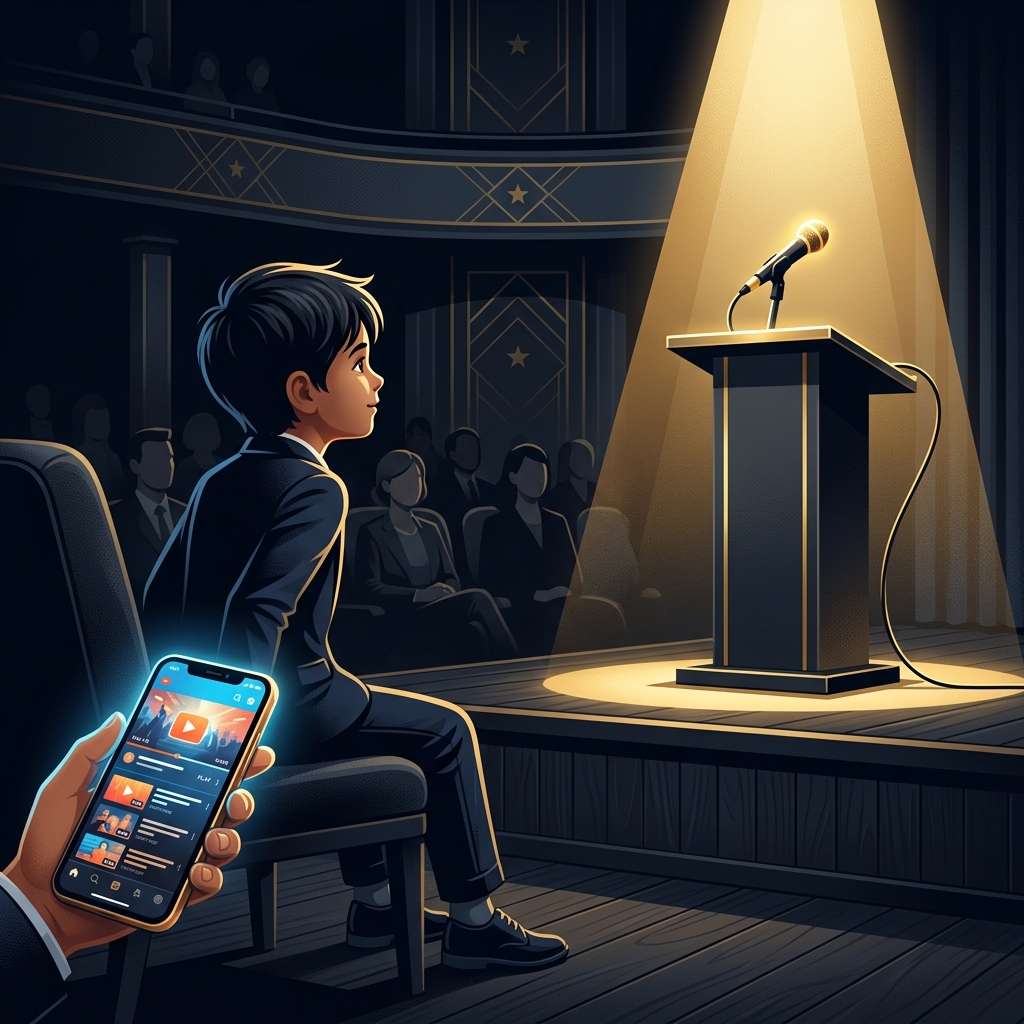
As the calendar turns toward the back-to-school season of June 2026, household dynamics around the world undergo a familiar shift. The scent of new notebooks, the rustle of freshly ironed uniforms, and the sudden morning rush return to daily life. For parents—ranging from local families in bustling metropolitan hubs to NRI communities residing across the Middle East and Gulf region—this transition brings a complex mix of excitement, hope, and underlying academic anxiety.
However, entering the new academic year 2026 requires a completely different perspective than in previous decades. The standard definition of a successful student has fundamentally transformed. In an era where information is instantly accessible, artificial intelligence is automating routine intellectual tasks, and global workplaces demand creative adaptability, high academic marks alone are no longer a guarantee of future success. Preparing your child for the challenges ahead requires a deliberate focus on real-world survival skills that go far beyond textbooks.
The Changing Global Landscape of Secondary Education
The paradigm of Secondary Education is undergoing a profound transformation worldwide. Historically, secondary schooling acted as a filter, sorting students based on their capacity to memorize extensive syllabi and reproduce them under exam pressure. Today, international schools in Dubai, Riyadh, and Doha, alongside advanced schools in India, are realizing that this factory-model curriculum is obsolete.
Modern educational institutions are shifting their target parameters. The current global standards for secondary education demand that students do not just consume information, but analyze it, query it, and apply it to multi-disciplinary problems. If your child is entering this crucial academic phase in 2026, their preparation must focus on developing analytical depth and conceptual agility rather than simple rote memorization.
Moving Away from Rote-Memorization (Ratta Marna)
In the traditional South Asian educational setup, the practice of *ratta marna* (rote memorization) was often rewarded with top marks. Students who could reproduce textbooks word-for-word were deemed academic geniuses. However, in 2026, this approach is a developmental dead end.
When search engines and AI assistants can answer factual queries instantly, the human brain’s value lies in its ability to synthesize disconnected facts, detect logical fallacies, and build new solutions. Parents must actively discourage their children from mindless memorization. Instead, ask them open-ended questions like, "Why do you think this happened?" or "How would you apply this science concept to solve a neighborhood problem?" This shifts the focus from knowing the answer to understanding the process.
Case Study: How Regional Boards are Evolving
This shift from memorization to skill mastery is not confined to international curricula; major regional educational bodies are also upgrading their frameworks. A prime example of this is the recent policy reforms pushed by the Education Minister of Maharashtra. Recognizing the gap between classroom teaching and industry requirements, these updates emphasize practical skill acquisition, conceptual clarity, and project-based evaluations.
Similarly, the Maharashtra State Board of Secondary and Higher Secondary Education has introduced key structural updates. By shifting its grading methodologies, incorporating application-based questions in board exams, and encouraging school administrations to prioritize extracurricular development, the board is actively steering millions of students away from traditional cramming. This real-world case study proves that even the largest regional boards are recognizing that the new academic year demands a curriculum centered on student competency rather than syllabus coverage.
Access vs. Excellence: The Real Goal of Modern Schooling
In discussions about educational policy, we frequently refer to foundational legal frameworks. The Right to Education has been a monumental achievement in ensuring that every child has physical access to a classroom, qualified teachers, and textbooks.
Access is merely the baseline; true excellence requires a deliberate choice by parents and educators to look beyond standard classrooms. A school might complete the syllabus, but it is the parents’ responsibility to ensure their child actually masters public speaking, digital literacy, critical analysis, and emotional resilience. To survive in the competitive post-2026 economy, children need specialized environments that convert standard school attendance into actual skill acquisition.
Critical Skills for 2026: From Syllabus Completion to Skill Mastery
As your child steps into the new academic year 2026, work with them to prioritize the following three foundational human skills:
- The Problem-Solving Mindset: Children should be taught to view difficulties as problems waiting to be solved rather than insurmountable obstacles. Whether it is a challenging math equation, a broken toy, or a social disagreement at school, encourage them to break the problem into smaller, manageable parts, test different hypotheses, and iterate based on results.
- Emotional Resilience under Pressure: The pressure on modern students—especially within competitive NRI peer groups in the Gulf region—is intense. Children face pressure from exams, extracurricular expectations, and social media dynamics. Building emotional resilience involves teaching them that failure is simply a data point, not a reflection of their self-worth.
- Critical Thinking and Media Literacy: We are living in an information-overloaded world filled with misinformation, deepfakes, and biased reporting. Children must learn to verify sources, cross-reference statistics, and understand the difference between objective facts and opinion pieces.
The Digital Equilibrium: Transforming Passive Screen Time into Active Learning
One of the most persistent parenting challenges of 2026 is managing digital devices. With the back-to-school season starting, many parents attempt to implement strict bans on tablets and smartphones. However, digital isolation is rarely a successful long-term strategy. The key lies in shifting your child's digital habits from passive consumption to active creation.
Instead of completely blocking screens, create a digital schedule that limits passive entertainment (like infinite video feeds) while reserving time for online resources that teach coding, language acquisition, creative writing, or collaborative projects. By guiding them toward interactive educational platforms, you transform a potential distraction into a powerful tool for intellectual growth.
The Power of Expression: Why Articulation is a Child's Ultimate Academic Shield
No matter how brilliant a child's internal ideas are, those ideas remain invisible if they cannot express them. In 2026, the ability to write persuasively and speak confidently is a child's ultimate academic and professional shield. Whether they are presenting a school science project, participating in a debate, writing a college application essay, or later interviewing for a global startup, clear articulation is what distinguishes a leader from a follower.
Unfortunately, standard school setups with large student-to-teacher ratios rarely provide the individual attention required to build strong communication skills. A child who is naturally hesitant often retreats to the back of the classroom, remaining silent throughout their school years.
This is precisely where specialized, cohort-based online platforms play a critical role. Victory Fluent Forum bridges this exact gap by offering interactive, online live classes designed to transform quiet, hesitant children into articulate, confident public speakers and creative writers.
Through tailored programs that focus on imaginative storytelling, structured debates, public speaking techniques, and creative writing, Victory Fluent Forum provides children with a safe space to find their voice. Instead of rote learning, students engage in practical, live exercises that build logic, build confidence, and help them structure their thoughts clearly. As you prepare your child for the new academic year 2026, giving them the gift of expression is one of the most impactful investments you can make in their future.
Conclusion: A New Blueprint for a Successful Academic Year
Preparing your child for the new academic year 2026 is not about purchasing more reference books or enrolling them in multiple rote-learning tuition centers. It is about shifting your parenting blueprint toward holistic excellence. By moving away from rote memorization, recognizing the difference between school access and skill mastery, guiding digital habits toward creation, and prioritizing clear articulation, you set your child up for long-term success. Let this academic year be the one where your child steps out from the shadow of textbook memorization and into the light of real-world confidence.
Prepare Your Child for Success Beyond Textbooks
Getting into top universities and succeeding in life requires elite communication. At Victory Fluent Forum (VFF), we provide specialized public speaking, creative writing, and confidence-building classes.
VFF is a premium communication academy incubated under the prestigious Symbiosis Launchpad 30 startup incubation (SSPU Pune). Led by Founder Mrs. Simran Bagwan (M.A. English, M.Ed), we turn anxious observers into confident leaders.
Active Pricing Structure (Mon–Fri Daily Classes):
1:5 Group Plan
1:1 Essential Plan
1:1 Intensive Plan
7-Day Dedicated Learning & Commitment Policy
To protect our mentors' premium time, refund claims under our satisfaction policy are strictly conditional. Claims are only valid if the student maintains 100% attendance in the first week and submits all daily creative assignments on time. Serious learners only.