Thought for the Day for School Assembly with Explanation (Grade-Wise Collection & Speaking Guide for Kids)
Simran Bagwan August 15, 2026 12 min read
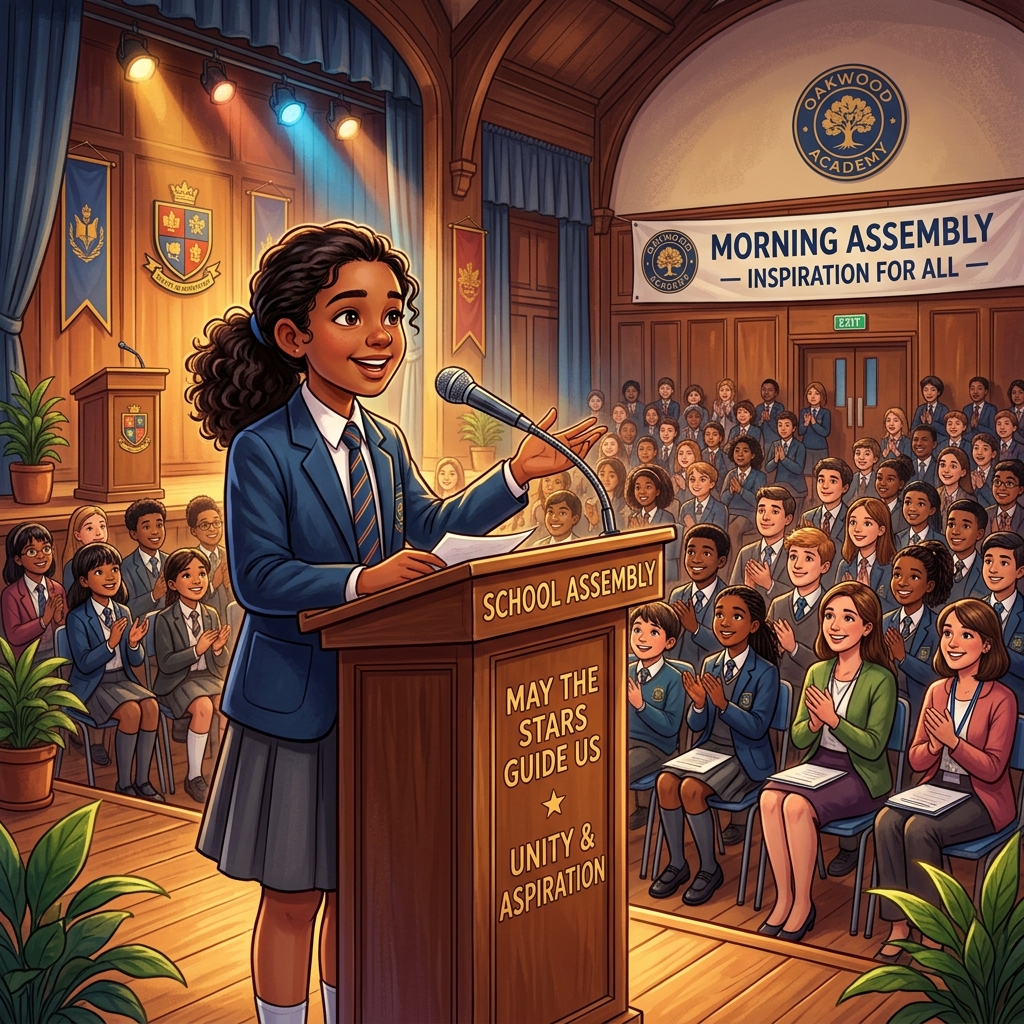
Imagine a typical school morning assembly. Students stand in neat rows in the quadrangle, their voices hushing as the morning bell rings. At the podium microphone, a young student steps forward holding a folded index card. She clears her throat, looks down at her notes, and rapidly recites:
"Thought for the day: 'Honesty is the best policy.' Meaning: We should always speak the truth. Thank you and have a nice day."
The presentation takes barely eight seconds before the speaker rushes back to her class line with a sigh of relief. In the crowd, classmates blink passively, having heard a familiar quote without any real connection or reflection.
At Victory Fluent Forum (VFF), through our communication coaching work with K–12 students, we frequently notice this pattern across school presentations. The problem is not that classic proverbs like "Honesty is the best policy" lack wisdom. The problem is that reciting a quote without explanation, real-life context, or student action turns powerful wisdom into empty noise.
A morning assembly thought should set the ethical tone for the entire school day. It should spark curiosity in a 7-year-old, prompt reflection in a 12-year-old, and leave teachers smiling in agreement. To achieve that, a student speaker needs more than a quote list—they need a structured speaking blueprint that explains why the thought matters and how to apply it on the playground, in the classroom, and at home.
VFF Thought-to-Action Model™
To make an assembly thought memorable and impactful, VFF speech coaches use a 5-step developmental framework that transforms passive recitation into confident stage articulation.
1
THOUGHT
The Quote
2
UNDERSTAND
Child Meaning
3
RELATE
Student Life Example
4
EXPLAIN
Stage Delivery Script
5
ACT
Today's Challenge
Why Generic Assembly Quote Lists Fail Students
When parents or students search online for "thought for the day for school assembly with explanation," most websites dump 100 or 200 random quotes copied from generic databases. These lists fail young speakers in three fundamental ways:
Vocabulary Mismatch: Quotes filled with 19th-century academic English (e.g., "Perseverance is the virtue of the noble") make elementary students stutter because they don't understand the words they are reciting.
Missing Real-World Hooks: A 9-year-old cannot relate abstract philosophical concepts to their life unless someone translates it into homework, football practice, or sharing lunchboxes.
Zero Delivery Support: Knowing what to say is only half the battle. If a child doesn't know where to pause, how close to hold the microphone, or how to end confidently, stage anxiety will override their delivery.
Below is our complete, grade-segmented collection of morning assembly thoughts—each complete with child-friendly meanings, real-life school examples, 30-second ready-to-speak stage scripts, and daily student challenges.
Grades 1–3: Simple Assembly Thoughts with Explanations (Ages 6–8)
Primary school children need brief, vivid thoughts expressed in simple words with concrete daily examples from their classroom or playground routine.
Theme: Kindness
"A little kindness makes the whole world warm."
Child-Friendly Meaning:
When you do one nice thing for someone, it makes them happy, and they pass that happiness to others.
Real-Life School Example:
Sharing your eraser when your classmate drops theirs, or inviting someone standing alone to join your game at recess.
30-Second Stage Delivery Script:
"Good morning respected Principal, teachers, and dear friends. Today's thought for the day is: 'A little kindness makes the whole world warm.' This means when we help a friend or share our things, we make our classroom a happy place. Today, let us all do one kind act for a classmate. Thank you and have a wonderful day!"
Theme: Practice & Effort
"Mistakes are proof that you are trying."
Child-Friendly Meaning:
It is okay to get an answer wrong. Falling down when learning to ride a bicycle just means your brain is practicing to get better.
Real-Life School Example:
Spelling a hard word incorrectly in your notebook, then erasing it and trying again with a smile.
30-Second Stage Delivery Script:
"Respected teachers and friends, today's thought is: 'Mistakes are proof that you are trying.' Never be afraid of making mistakes in class. Every mistake teaches us how to succeed next time. Don't give up—keep trying! Thank you!"
Theme: Honesty
"Truth is like a bright light that never goes out."
Child-Friendly Meaning:
Telling the truth makes your mind feel light and peaceful, while telling a lie makes you feel worried all day.
Real-Life School Example:
Admitting to your teacher right away if you accidentally broke a crayon or forgot your homework.
30-Second Stage Delivery Script:
"A very happy morning to everyone! Today's thought is: 'Truth is like a bright light that never goes out.' When we speak the truth, we don't have to hide anything. Be brave and be honest every single day. Thank you!"
Theme: Gratitude
"Saying 'Thank You' turns what we have into enough."
Child-Friendly Meaning:
Being thankful for our parents, teachers, and toys makes us feel happy inside instead of always wanting more.
Real-Life School Example:
Thanking the bus driver when you get off, or thanking your mom for packing your favorite fruit snack.
30-Second Stage Delivery Script:
"Good morning teachers and friends! Today's thought for the day is: 'Saying thank you turns what we have into enough.' Gratitude makes us rich at heart. Remember to thank your teachers and parents today. Have a joyful day ahead!"
Grades 4–5: Applied Value Assembly Thoughts (Ages 9–10)
Students in upper primary are developing stronger logic and peer relationships. Assembly thoughts for this age group should focus on perseverance, teamwork, time management, and self-confidence.
Theme: Perseverance
"Great achievements take time; work quietly and keep moving."
Child-Friendly Meaning:
Big goals like mastering math, learning guitar, or winning a race cannot happen overnight. Consistent daily effort is the secret.
Real-Life School Example:
Practicing 10 math problems every single afternoon before Sports Day instead of trying to study everything the night before.
30-Second Stage Delivery Script:
"Good morning respected Principal, teachers, and fellow students. Today's thought for the day is: 'Great achievements take time; work quietly and keep moving.' Success isn't built in one day—it is built by tiny efforts repeated every single day. Let us stay patient and keep practicing. Thank you!"
Theme: Teamwork
"If you want to go fast, go alone. If you want to go far, go together."
Child-Friendly Meaning:
Working by yourself might seem faster, but working with a team helps you solve bigger problems and achieve much greater success.
Real-Life School Example:
Group science projects where one student researches, another draws diagrams, and a third presents the results to the class.
30-Second Stage Delivery Script:
"Respected teachers and dear friends, today's thought for the morning assembly is: 'If you want to go fast, go alone. If you want to go far, go together.' Real success comes from supporting your teammates. Listen to others and work together today. Thank you and have a productive day!"
Theme: Time Management
"Time is a gift that cannot be bought back once spent."
Child-Friendly Meaning:
Every hour of your day is valuable. Using your time wisely between study, play, and rest helps you live without hurry or stress.
Real-Life School Example:
Packing your school bag before going to sleep so you don't panic or forget books during the morning rush.
30-Second Stage Delivery Script:
"A very warm morning to everyone present! Today's thought is: 'Time is a gift that cannot be bought back once spent.' Don't waste your precious time on unnecessary distractions. Focus on what matters right now. Thank you!"
Theme: Environmental Responsibility
"The Earth does not belong to us; we belong to the Earth."
Child-Friendly Meaning:
We are guardians of our environment. Taking care of plants, animals, and clean water is our duty, not an option.
Real-Life School Example:
Turning off leaking taps in the school washroom and picking up plastic wrappers dropped near the canteen.
30-Second Stage Delivery Script:
"Good morning everyone! Today's thought for the day is: 'The Earth does not belong to us; we belong to the Earth.' Small habits like conserving water and keeping our school green protect our collective future. Let us protect our planet starting today. Thank you!"
Middle school is a crucial transition period. Students in Grades 6–8 face increasing academic expectations and complex peer dynamics. Assembly thoughts should tackle self-discipline, resilience, empathy, and overcoming fear.
Theme: Growth Mindset
"Your mindset determines whether an obstacle becomes a wall or a stepping stone."
Child-Friendly Meaning:
A difficult situation isn't an end point; it's a test of perspective. You can either complain about difficulties or use them as opportunities to grow stronger.
Real-Life School Example:
Failing a unit test and using it as a diagnostic roadmap to ask your teacher for help rather than deciding "I'm just bad at math."
30-Second Stage Delivery Script:
"Good morning respected Principal, teachers, and schoolmates. Today's thought for the day is: 'Your mindset determines whether an obstacle becomes a wall or a stepping stone.' When challenges arise, don't ask 'Why me?' Ask 'What can I learn from this?' Turn your hurdles into your stepping stones. Thank you!"
Theme: Integrity
"Integrity is doing the right thing when nobody is watching."
Child-Friendly Meaning:
True character isn't shown when your parents or teachers are evaluating you. It is shown in how you behave when you are completely alone.
Real-Life School Example:
Refusing to copy homework answers from a WhatsApp group chat, even if the teacher will never find out.
30-Second Stage Delivery Script:
"Respected teachers and fellow students, today's morning assembly thought is: 'Integrity is doing the right thing when nobody is watching.' Real self-respect comes from staying honest with yourself. Let character guide your choices today. Thank you!"
Theme: Discipline vs Motivation
"Motivation gets you started; habit and discipline keep you growing."
Child-Friendly Meaning:
Feeling inspired lasts a day, but daily self-discipline is what carries you through months of hard work until you achieve your goal.
Real-Life School Example:
Waking up at 6 AM every morning to practice basketball drills, even on days when you feel sleepy or unmotivated.
30-Second Stage Delivery Script:
"Good morning everyone. Today's thought is: 'Motivation gets you started; habit and discipline keep you growing.' Don't wait for inspiration to begin your work. Build strong daily habits, and success will follow automatically. Thank you!"
Theme: Digital Responsibility
"Technology should be a tool in your hand, not a master of your mind."
Child-Friendly Meaning:
Smartphones and apps are meant to help us learn and connect, not consume our entire attention span and steal our real-world time.
Real-Life School Example:
Putting your smartphone in another room while completing your reading assignment so you stay completely focused.
30-Second Stage Delivery Script:
"A warm morning to all! Today's thought for the day is: 'Technology should be a tool in your hand, not a master of your mind.' Use technology to create, learn, and grow—don't let screen time hijack your real life. Thank you and have a mindful day!"
Grades 9–12: Leadership, Resilience & Character Thoughts (Ages 14–17)
High school assembly presentations demand intellectual maturity, rhetorical strength, and deep moral resonance. Senior students speaking at assembly should inspire their peers toward leadership, independent thinking, and long-term vision.
Theme: Leadership
"Leadership is not about a title or a badge; it is about impact and influence."
Child-Friendly Meaning:
You don't need to be head boy, head girl, or team captain to lead. Real leaders elevate those around them through their daily actions and empathy.
Real-Life School Example:
Standing up for a younger student being teased in the school corridor, or helping a struggling peer catch up before board exams.
30-Second Stage Delivery Script:
"Good morning respected Principal, esteemed teachers, and my fellow students. Today's thought for the morning assembly is: 'Leadership is not about a title or a badge; it is about impact and influence.' True leadership begins when you choose to lift others up rather than stand above them. Lead by example today. Thank you!"
Theme: Moral Courage
"It takes great courage to stand up to your enemies, but far more to stand up to your friends."
Child-Friendly Meaning:
Disagreeing with opponents is easy; saying 'no' to peer pressure when your close friends are doing something wrong requires ultimate courage.
Real-Life School Example:
Refusing to participate when your friend circle starts making fun of someone online or excluding a classmate.
30-Second Stage Delivery Script:
"Respected teachers and dear friends, today's thought for the day is: 'It takes great courage to stand up to your enemies, but far more to stand up to your friends.' Never compromise your moral compass to fit into a crowd. Be brave enough to stand for what is right. Thank you!"
Theme: Resilience
"Smooth seas never made a skilled sailor."
Child-Friendly Meaning:
Easy times don't test or build your character. It is navigating through setbacks, failures, and rejection that develops true mental toughness.
Real-Life School Example:
Not getting selected for the school debate team, but using the feedback to train harder for the next inter-school tournament.
30-Second Stage Delivery Script:
"Good morning everyone. Today's thought is: 'Smooth seas never made a skilled sailor.' Do not fear difficulties or competitive pressure. Welcome them as the training ground for your future resilience and growth. Thank you!"
Theme: Self-Reflection
"The only person you should strive to be better than is the person you were yesterday."
Child-Friendly Meaning:
Comparing yourself to classmates creates anxiety or pride. Real personal growth comes from outperforming your own past performance.
Real-Life School Example:
Focusing on raising your own grade point average from 75% to 82% rather than worrying about who got the highest marks in class.
30-Second Stage Delivery Script:
"Respected Principal, teachers, and friends, today's thought for the day is: 'The only person you should strive to be better than is the person you were yesterday.' Stop comparing your journey with others. Focus on your personal growth, one step at a time. Thank you!"
The Public Speaking Formula: How to Deliver an Assembly Thought Confidently
Teaching a student what to say is only half the battle. At Victory Fluent Forum, we train students to command the morning assembly stage using our 30-Second & 1-Minute Assembly Delivery Formulas.
VFF Stage Rule: The 2-Second Silent Pause
Most nervous students start talking the instant they reach the microphone. Teach your child to step up to the podium, pause silently for 2 full seconds while looking at the audience, take a deep diaphragm breath, and then open. This instant 2-second pause project poise and immediately commands auditorium attention.
The 30-Second School Assembly Delivery Formula
Stage Section
Target Timing
Word Count
What to Say / Do
1. Opening Hook & Announcement
0–5 Sec
10–12 Words
"Good morning respected Principal, teachers, and friends. Today's thought for the day is..."
2. The Thought / Quote
5–12 Sec
10–15 Words
State the quotation slowly with clear vocal emphasis on key words.
3. Simple Child Meaning
12–22 Sec
20–25 Words
"This means..." (Explain in 1–2 simple, jargon-free sentences).
4. Student Action Call & Close
22–30 Sec
12–15 Words
"Today, let us all challenge ourselves to... Thank you and have a wonderful day!"
The 1-Minute Extended Assembly Delivery Formula (For Senior Students)
For Grades 6–12, a 1-minute speech allows room for a short 15-second real-life anecdote or school story. According to VFF's Speech Length Calculator, a measured 1-minute speech contains between 110 to 130 words at a natural speaking speed of 120 WPM.
1. Anchor Posture
Stand 6 inches from mic. Feet shoulder-width apart. Hands relaxed.
2. Silent 2-Sec Pause
Look up, smile at the crowd, take a quiet diaphragm breath before speaking.
3. State Quote & Story
Deliver quote slowly, then share a 20-second schoolyard scenario.
4. Confident Call-to-Action
End with a clear challenge to classmates and a firm, smiling thank you.
Right before stepping up to the microphone, the student speaker should silently review:
Microphone Check: Am I standing 5–6 inches away from the mic grille so my voice doesn't sound thin or muffled?
Speed Check: Am I rushing? (Remind yourself: Speak at half your normal speed, and take a pause at every comma.)
Face Check: Look for one smiling teacher or friend in the front row—deliver your first sentence directly to them.
2. The Teacher's 5-Minute Morning Assembly Selection Method
Teachers responsible for morning assembly duties can follow this fast 5-minute prep process:
Select by Theme: Pick a thought from our grade-wise collection that aligns with current school events (e.g., Sports Day → Perseverance; Exam Week → Growth Mindset; Environment Week → Eco-Responsibility).
Read Script Aloud Twice: Have the assigned student read the 30-second ready script aloud in homeroom twice to master pronunciation.
Check Vocal Projection: Ensure the student projects from their diaphragm rather than shouting from their throat.
3. The Parent 10-Minute At-Home Practice Protocol
If your child is assigned the assembly thought for tomorrow, conduct this low-pressure 10-minute dinner practice:
Minute 1–3: Read the thought and child-meaning together. Ask your child: "What does this mean in your own words?"
Minute 4–7: Practice standing at the dining table holding a pencil as a pretend microphone. Have them deliver the 30-second script twice.
Minute 8–10: Praise their posture, eye contact, and loud clear voice. Avoid picking on tiny word variations—confidence matters more than verbatim memorization.
Free Parent & Student Resource
Printable School Assembly Thought Cards & Speaking Blueprint
Get our free 1-page printable pocket guide featuring 30 curated assembly thoughts with 30-second scripts, stage posture cheat sheet, and pre-assembly breathing ritual.
Related Public Speaking Resources for Students & Educators
To continue building your child's stage confidence and public speaking repertoire, explore VFF's comprehensive educational guides and interactive tools:
Speech Length Calculator — Calculate speech word counts based on your child's speaking speed (WPM).
Frequently Asked Questions
Why is it important to provide an explanation after reciting a thought for the day in school assembly?
Reciting a quotation alone often leaves younger students confused because proverbial language is abstract. Providing a 2-sentence simple explanation paired with a real-life student example converts abstract wisdom into concrete daily behavior that classmates can understand and practice immediately.
How long should a student speak when explaining the thought for the day during morning assembly?
A thought for the day delivery should take between 30 to 60 seconds (approx 60–120 words). This provides enough time to state the quote, explain its simple meaning, share a quick student example, and close with an inspiring action call without exceeding assembly time limits.
How can a student overcome stage fear before speaking at the morning assembly microphone?
Students can defeat stage fear by practicing the 30-Second Stage Delivery Formula at home, using 4-second Box Breathing right before stepping up, maintaining physical microphone posture 6 inches away, and focusing on delivering one sentence to one friendly face in the audience.
What are the best thought for the day topics for primary school students (Grades 1-3)?
The best primary school topics revolve around foundational personal habits and values such as Kindness, Honesty, Helping Friends, Practice, Sharing, and Daily Hygiene. The explanations must be short (15-20 words) with immediate schoolyard examples.
How can teachers select and prepare students for assembly thoughts in just 5 minutes?
Teachers can use the VFF 5-Minute Assembly Prep Method: (1) Select a theme-aligned thought from our grade-wise collection, (2) Have the student read the 30-second ready script aloud twice, (3) Practice microphone projection and a silent 2-second opening pause.
How can parents help practice the assembly thought at home without causing stress?
Parents can conduct a 3-minute casual dinner rehearsal: ask the child to stand straight, speak the thought in a clear projecting voice, and give positive feedback on eye contact and smile rather than correcting minor word slips.
Transform Your Child's Stage Confidence with VFF
Delivering the morning assembly thought is often a child's very first introduction to public speaking. When done right, it builds a lifelong foundation of stage poise, clear articulation, and leadership confidence.
At Victory Fluent Forum, our live 1-on-1 and small group public speaking programs empower K-12 students to conquer stage fear, master speech structure, and articulate their thoughts with authentic charisma. Explore our live mentoring pathways today and watch your child step up to any microphone with joy and conviction.
Want Guided Practice for Your Child's Next School Speech?
Book a 1-on-1 live diagnostic session with VFF expert speech mentors to evaluate your child's speaking pace, voice modulation, and stage posture.