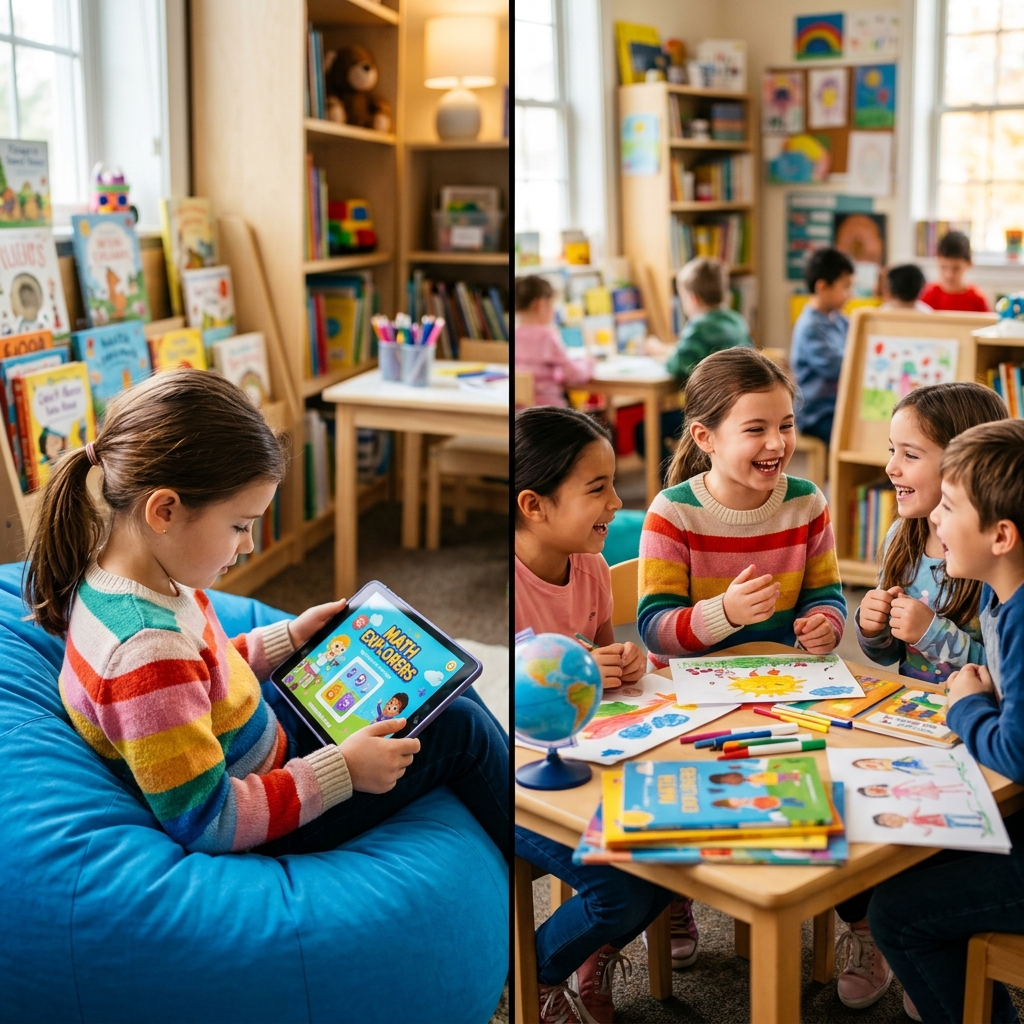
Modern parenting faces a new and formidable competitor: the digital attention economy. Short-form video platforms (TikTok, Instagram Reels, YouTube Shorts) are engineered to capture human focus by delivering dopamine micro-doses every 10–15 seconds. For K-12 students whose prefrontal cortexes are still developing, this constant sensory stimulation raises the baseline threshold for engagement. Traditional tasks—such as reading books, drafting essays, or conducting school research—become frustrating and boring because they lack the rapid visual updates of a screen. To help children reclaim their attention span and logical reasoning, we must transition them from passive digital consumers to active creators. The ultimate cognitive antidote is structured interactive creative writing workshops for children.
At Victory Fluent Forum, we believe that creative writing is mental weightlifting. By engaging in generative writing, children develop sustained concentration, lexical variety, and deep logical connection. Let's analyze how the "scroll loop" affects K-12 brains and outline five practical tips to build a writing habit at home.
1. The Neurobiology of the "Scroll Loop"
Dopamine is the neurotransmitter responsible for motivation, learning, and reward. When a child swipes to a new video, the brain's reward center releases a burst of dopamine. Because the algorithm continuously serves content tailored to their interest, the child enters a state of sensory saturation, commonly referred to as the scroll loop.
This high-frequency stimulation trains the brain to expect instant gratification. When forced to concentrate on low-frequency, single-focus tasks (like writing a paragraph on paper), the child experiences cognitive withdrawal. They struggle to find words, display physical restlessness, and lose interest. Over time, this leads to lexical erosion, where their vocabulary drops and they rely on vague filler words ("like," "stuff," "thing") in place of descriptive, articulate expression.
2. Why Creative Writing is the Ultimate Cognitive Antidote
Unlike reading or watching, writing is a fully generative process. To write a simple story, the brain must activate multiple neural pathways simultaneously: recalling vocabulary, organizing grammar syntax, mapping out a narrative timeline using a standard story writing format, and visualizing characters. This process requires sustained attention and builds cognitive stamina.
Furthermore, writing teaches children that true satisfaction comes from the step-by-step creation of an original concept, not a quick screen swipe. It fosters self-reflection and empathy as they put themselves in the shoes of their characters, helping them process school stress and emotional challenges.
3. Five Strategies to Transition Your Child from Screen to Page
Here are five practical tips to help parents transition their child from passive screen consumption to creative writing:
A. Establish a Screen-Free Creative Zone
Designate a physical space in the house solely for writing. Keep this zone entirely free of digital devices. Equip it with high-quality notebooks, colorful pens, sketchpads, and physical reference books (like a dictionary and thesaurus). This physical environment signals to the brain that it is time for focused, tactile creation.
B. Use Multi-Sensory Story Starters
Instead of providing a generic writing prompt, stimulate their senses. Place a mysterious, vintage key on the table and ask: *"Who owned this key? What door does it open?"* Or play a piece of ambient orchestral music and ask them to describe the landscape the music represents. This multi-sensory approach captures their imagination without the need for high-frequency screens.
C. Gamify the Writing Process
Turn writing into a family activity. Play games like **"The Continuous Story"** where each family member writes one sentence of a story in turn, or set a weekly writing challenge with small, non-digital rewards (like choosing the family movie on Saturday or a special trip to a bookstore).
D. Focus on Character Profiles First
If your child has writer's block, start small. Instead of writing a full story, have them design a single character profile. Ask them to draw the character, list their three favorite things, their biggest secret, and their ultimate goal. Building a character is highly engaging and serves as a natural stepping stone to narrative writing.
E. Publish and Celebrate Their Work
Children thrive on positive reinforcement. Create a physical "Family Anthology" binder where you store their completed stories. Read their work aloud during dinner and celebrate their creative choices. When a child receives human praise for their original ideas, it releases a healthy, positive dopamine reward that outperforms any online like or emoji.
4. Victory Fluent Forum Practical Strategy: The VFF "Story Arc Builder" Exercise
At Victory Fluent Forum, we use a structured story-building framework called the **Story Arc Builder** to help K-12 students transition their ideas onto paper. You can practice this simple 30-minute exercise with your child weekly:
- Step 1: The Three-Word Prompt: Give the child three random, physical objects (e.g., *Compass, Key, Forest*). They have 5 minutes to outline how these three objects are connected.
- Step 2: Define the Conflict: Ask the child: *“What does your character want, and what is stopping them from getting it?”* Every great story is built on conflict, which teaches kids logical cause-and-effect reasoning.
- Step 3: The 3-Act Structure: Guide the child to write a short 300-word draft divided into three distinct paragraphs:
- Paragraph 1 (The Setup): Introduce the character, the setting, and the three objects.
- Paragraph 2 (The Obstacle): The character faces a major challenge when trying to use the objects.
- Paragraph 3 (The Resolution): How the character overcomes the challenge using their wits.
5. Conclusion: Reclaiming Attention and Imagination
Breaking the dopamine loop requires patience and discipline. Screens are designed to be addictive, and the transition to creative writing will meet with resistance initially. However, by establishing screen-free writing habits, using sensory starters, and celebrating their stories, we can help our children build sustained concentration, rich vocabulary, and independent thinking. In an automated world, the ability to create, articulate, and connect through original narratives is the ultimate human skill—and it starts with a single page. To help your child master these writing skills step-by-step, explore our definitive guide on Paragraph Writing for Kids.
Help Your Child Overcome Screen Addiction
Transitioning from passive screens to active writing requires structure. At Victory Fluent Forum (VFF), our expert creative writing mentors guide students step-by-step through elite narrative frameworks.
VFF is a premium communication academy incubated under the prestigious Symbiosis Launchpad 30 startup incubation (SSPU Pune). Led by Lead Academic Mentor Mrs. Simran Bagwan (M.A. English, M.Ed), we turn anxious observers into confident leaders.
Active Pricing Structure (Mon–Fri Daily Classes):
1:5 Group Plan
1:1 Essential Plan
1:1 Intensive Plan
7-Day Dedicated Learning & Commitment Policy
To protect our mentors' premium time, refund claims under our satisfaction policy are strictly conditional. Claims are only valid if the student maintains 100% attendance in the first week and submits all daily creative assignments on time. Serious learners only.